Cleaning the bridge

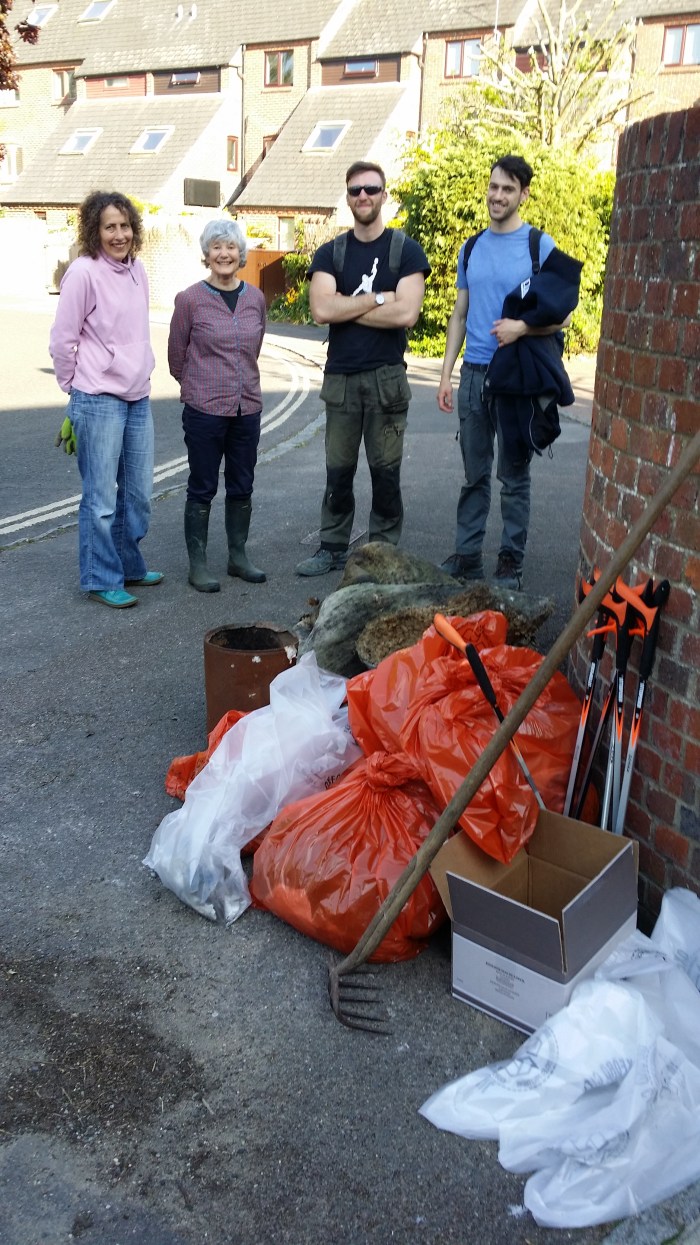
On Wednesday 10 May 2017 a group of about eight of SENDRA members set to work to clear the rubbish from under and around the green bridge.  Two archaeologists happened to be passing when members were trying to move a sodden carpet and they helped carry it. Here a photograph with the piles of rubbish that had been collected.


20170510_175054

Litter blitz (March 2017)

Saturday 4 March 2017, fifteen SENDRA residents turned out for the OxClean Litter Blitz.  Two stalwart residents recovered a couple of bicycles and a shopping trolley from Castle Mill Stream, one of which was stolen before the City Council recovered all the litter from Thames Street (but not before this photo was taken).
Following the Litter Blitz, residents met for coffee, cake and biscuits.  Lemon drizzle cake went down especially well as did the Malawian recipe banana bread.

A clarification about non-return valves

The SENDRA committee has just received this valuable clarification about non-return valves from Alan Alcock. We think it may be useful for all members to read it.

OLYMPUS DIGITAL CAMERA
non-return valves, courtesy of Wikipedia


Dear Chair,

I don’t know who suggested the installation of non-return valves.  No doubt the committee’s advice is well-intentioned.  However, it seems to me to be misguided.

I shall try to explain.  In my front garden is a manhole where the soil and waste pipe from my house joins the drainage system.  Everyone has something similar.  Now, imagine that the river level rises to such an extent that it fills up the system and overflows into my garden, your garden, the street etc..  Let us suppose it eventually reaches the level of my ground floor, our ground floors.  Note that this is the level of the effluent inside my soil pipe which can rise about another 40cm before the ground floor WC overflows inside my house.  Note also, however, that the effluent is already starting to enter my/your house via the front door, or any other door at ground floor level.  Any non-return valve fitted on my soil pipe has been by-passed.  So the installation of one of these gadgets achieves nothing.  I therefore think that you and your committee should withdraw your advice.

On a more general note, I was encouraged by Chris Knight’s recent paper on flooding.  It seems to me both sensible and positive.  So why are we making questionable proposals to mitigate flooding as if it is likely?  Old habits….?

Best wishes.

Alan Alcock

SENDRA meeting with Laing O’Rourke

SENDRA members have been invited by Laing O’Rourke, the construction company that is building the new Westgate center, for a short discussion about environmental monitoring.

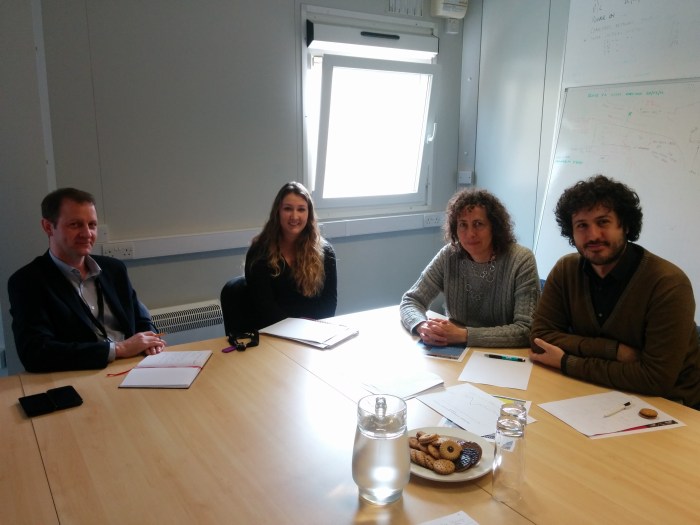
The meeting took place on the 11th of March (2016) at the site offices. There were the Project Liaison Officer, the Sustainability Manager and two members of SENDRA.

IMG_20160311_112542

SENDRA explained that there were concerns about possible worsening of noise, vibration and air quality due to the presence of the constructions. Laing O’Rourke representatives showed how the site is being constantly monitored thanks to two electronic equipments. Details about noise levels, dust and vibrations were discussed. All the figures and graphs shown by Lang O’Rourke proved that the measurements were below the fixed thresholds. The data was shown as daily or weekly averages, which do not exclude the possibility that occasional peaks get over the thresholds. SENDRA members were assured that, when peaks are detected, an alarm is produced so that corrective measures can be taken.

In conclusion, SENDRA members were satisfied by the levels of dust, noise and vibration being shown and were reassured by the monitoring measurements being put in place. Laing O’Rourke promised to publish regular updates about the measurements and to mention if any “exceptional” event might produce spikes and what actions are taken to keep them under control.

Results of the air quality measurement campaign

The results of the air quality measurement campaign are available for all SENDRA members.

We took two samples at two different sites: Thames Street and Dale Close of Nitrogen Dioxide (NO2), a typical product of combustion, especially of diesel engines. NO2 is sadly known for it effects on human health, as this sheet from DEFRA explains well.

The results of our measurements are as shown in this table:


Sample Number Site Date and Time ON Date and Time OFF Exposure Time (Hours) Total μg μg m-3 ppb Bias Adjusted
OXF/15A/NA1S1 8 THAMES ST OXF 10/01/16 12:36 10/02/16 19:17 750.68 1.13 21.6 11.2 17.928
OXF/15A/NA1S2 DALE CLOSE OXF 10/01/16 12:43 10/02/16 19:10 750.45 1.36 25.9 13.5 21.497

Note: bias is 0.83

Both measurements are much less than the limit for the annual mean of 40 microgrames m3 of NO2. It has to be considered that our monitoring was only a ‘snapshot’ of one month, the situation could change over time or there could be peaks that are not detected with this technique. Nonetheless, these measurements give an indication that, at least for what regards NO2, air quality is satisfactory in our area.


To confirm these measurement, we can have a look at the official county’s figures. If we select the measurements done in Thames Street at the height of Trinity Street, you can see that the numbers are always below the threshold of 40 and consistent with our measurement.

In the future, it would be interesting to observe what are the level of noise and dust, especially since the works at the Westgate have started.


SENDRA and Clean Air UK measure air quality in the area

Some SENDRA members are worried about the impact of the Westgate developments and the increasing levels of traffic on the quality of the air they breathe.

SENDRA has established a collaboration with the Network for Clean Air UK, an Oxford based association that organises programmes of citizen science projects to measure air pollution. Network for Clean Air has kindly offered SENDRA two diffusion tubes for measuring the concentration of Nitrogen Dioxide, one of the main air pollutants generated by combustion engines.

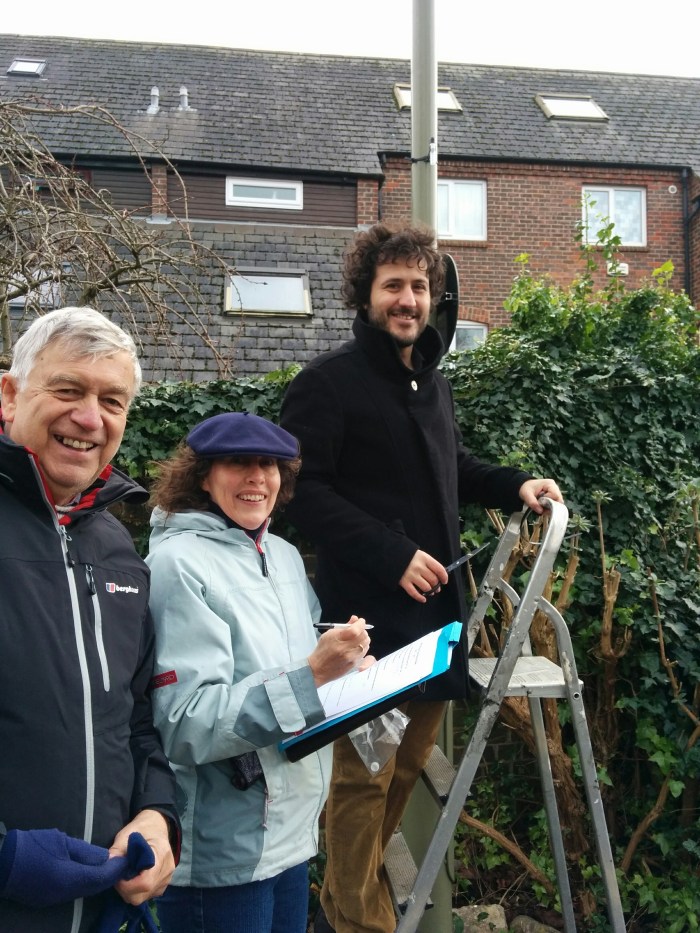
Tubes were installed on the 10th of January 2016 in two locations: Thames Street and Dale Close. This way we will be able to compare the level of exposure to pollutants between homes close to the main roads and those a bit more inside.

The installed tubes will be removed at the beginning of February and sent to a lab where they will be analysed. Results will be distributed to SENDRA members as soon as they are available.

IMG_20160110_124627
SENDRA members installing a diffusion tube in Dale Close